EIP
Definition
EIP is Extended Instruction Pointer.
It's a register in x86 architecture (32-bit), its 64 version is called "RIP".
The EIP is used to store the address of the next instruction.
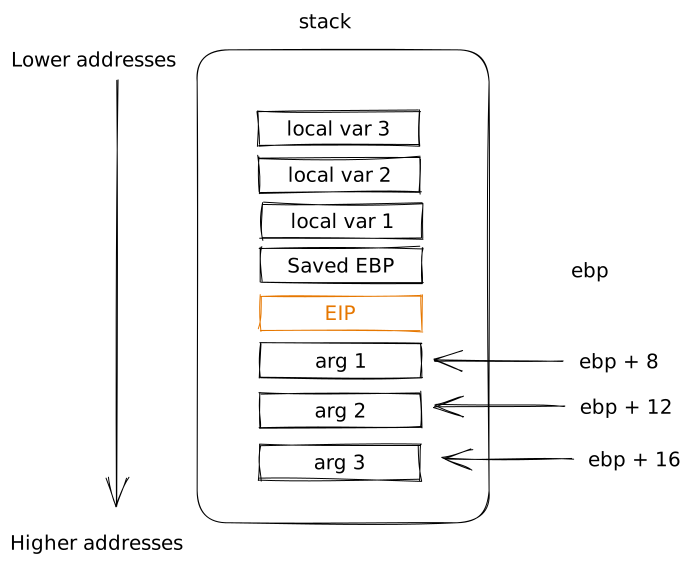
When calling a function, the EIP is stored beneath the stack frame of the called function.
This is what we have seen in the diagram.
Stack frame
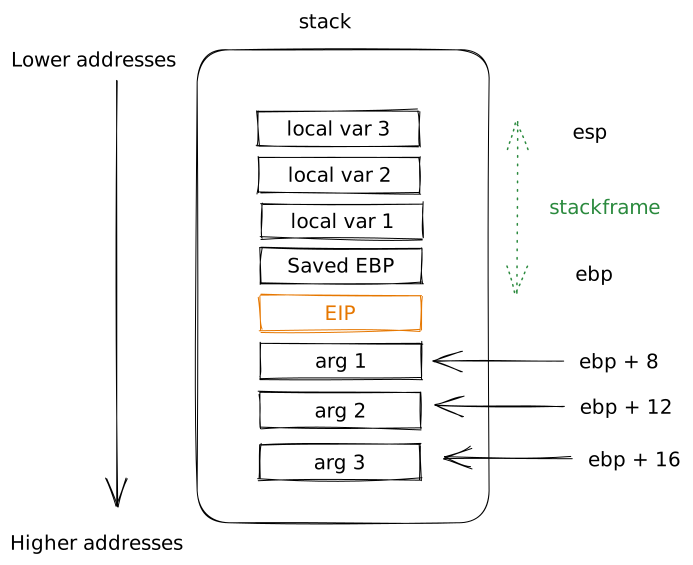
As shown earlier, the stack is used to store temporary variables (i.e: local variables, arguments).
Each function has its own stack frame, meaning everything in-between the esp (top of the stack) and ebp (bottom of the stack).
Simple calls
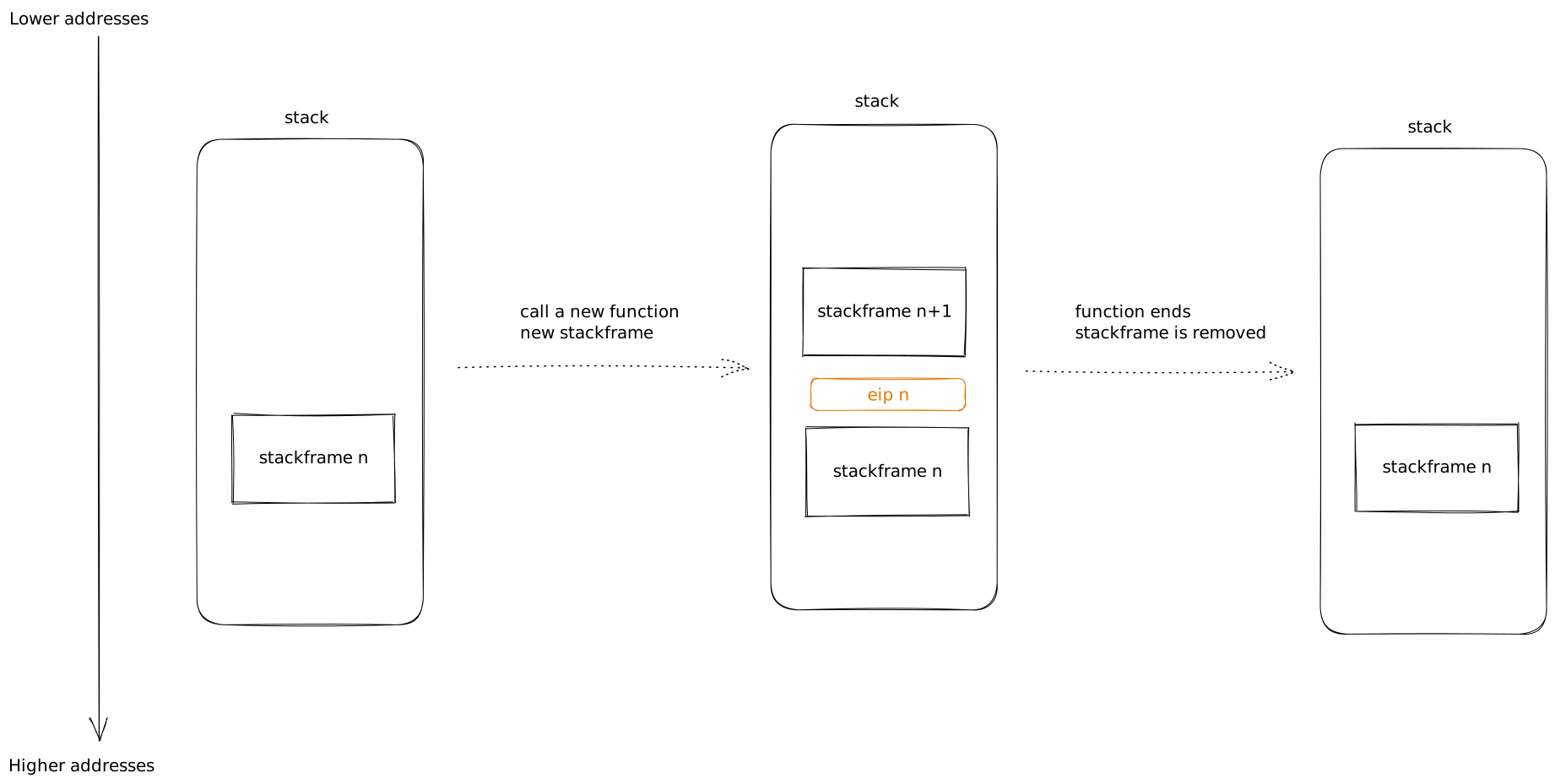
So each time you call a new function, a new stack frame is added, with its own local variables.
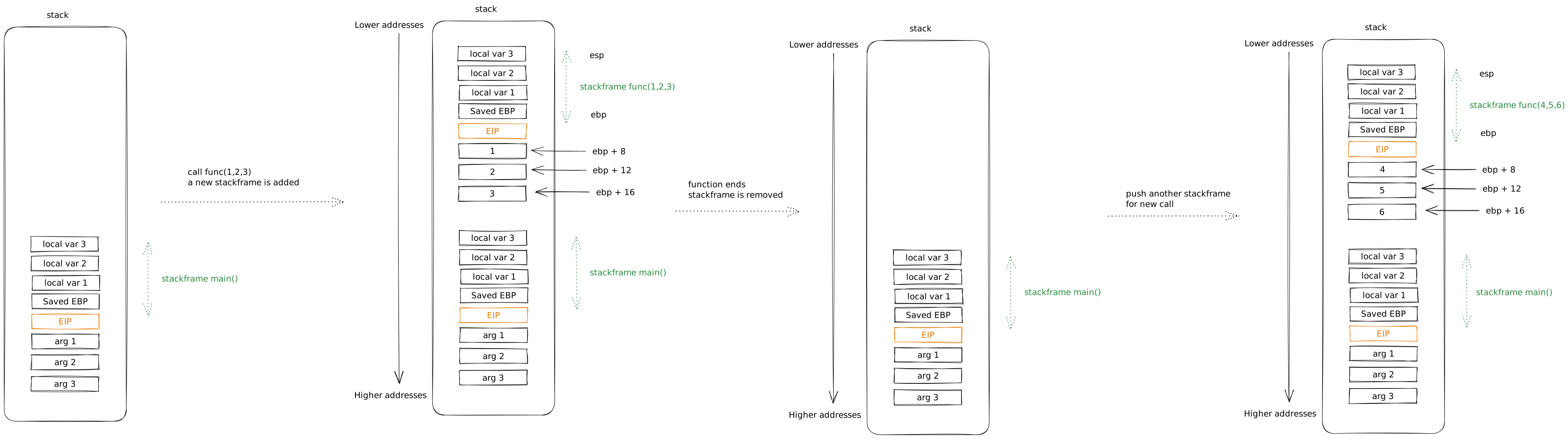
For example, let's take 3 calls to the same function, one after each other.
int func(int a, int b, int c)
{
    int local_var1 = 0;
    int local_var2 = 1;
    int local_var3 = 2;

    return 0;
}

int main()
{
    func(1, 2, 3);
    func(4, 5, 6);
    func(7, 8, 9);
    return 0;
}
The stack will look like this :
Successive calls
int two()
{
    return 0;
}

int one()
{
    two();
    return 0;
}

int main()
{
    one();
    return 0;
}
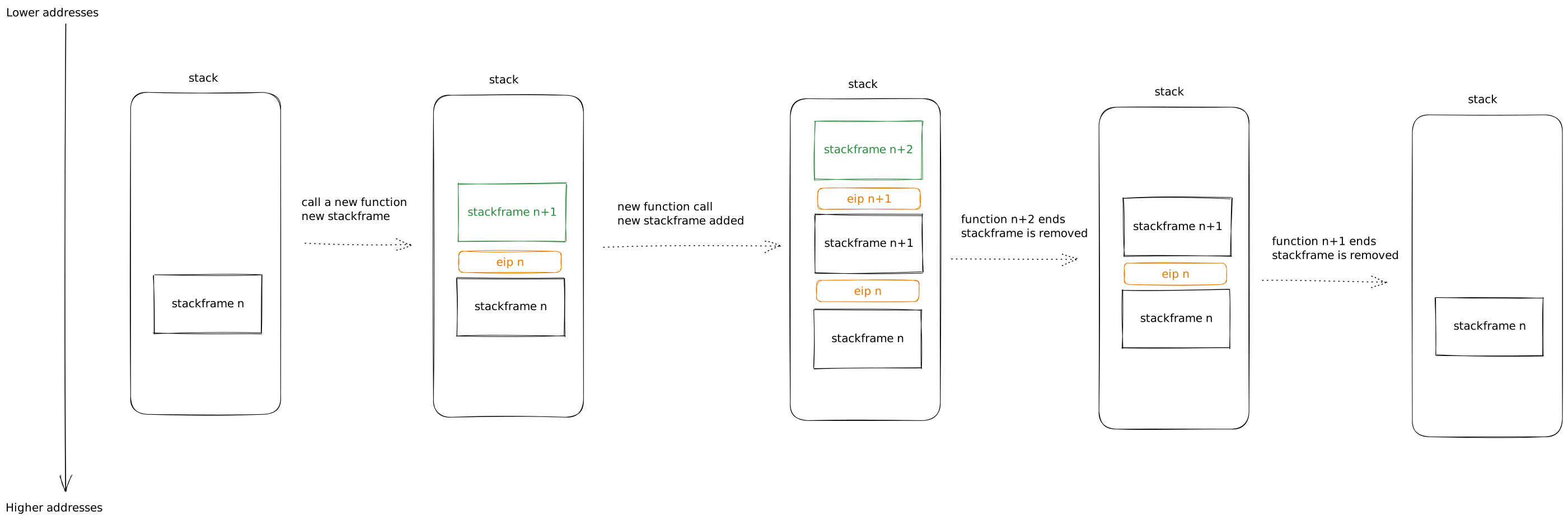
Also, you can observe the presence of EIP below each stack frame.
When you call a function, you store the EIP (next instruction) before setting a new stackframe.
When you end a function, the saved EIP is used to go back to where we were, and resume execution after the call.
Setting a new stack frame and removing it is the job of the prologue and the epilogue, which is present in each function.
Prologue
By disassembling binaries, you can observe some patterns in the code, especially at the beginning and ending of functions.
int hello()
{
    char buffer[20] = {0};
    return 1;
}

int main()
{
    return hello();
}
gcc main.c -o main -m32     # compile for 32-bit
objdump -d -M intel main    # disassemble
0000117d <hello>:
    117d:       55                      push   ebp
    117e:       89 e5                   mov    ebp,esp
    1180:       83 ec 20                sub    esp,0x20
    1183:       e8 7d 00 00 00          call   1205 <__x86.get_pc_thunk.ax>
    1188:       05 6c 2e 00 00          add    eax,0x2e6c

# ...

000011b7 <main>:
    11b7:       55                      push   ebp
    11b8:       89 e5                   mov    ebp,esp
    11ba:       83 ec 20                sub    esp,0x20
    11bd:       e8 43 00 00 00          call   1205 <__x86.get_pc_thunk.ax>
    11c2:       05 32 2e 00 00          add    eax,0x2e32
    11c7:       c7 45 e2 00 00 00 00    mov    DWORD PTR [ebp-0x1e],0x0
    # ...
    11fe:       e8 7a ff ff ff          call   117d <hello>
# ...
That is the prologue.
Let's go through it step-by-step.
Epilogue
0000117d <hello>:
    117d:       55                      push   ebp
    117e:       89 e5                   mov    ebp,esp
    1180:       83 ec 20                sub    esp,0x20
    # ...
    11a9:       c7 45 fc 00 00 00 00    mov    DWORD PTR [ebp-0x4],0x0
    11b0:       b8 01 00 00 00          mov    eax,0x1
    11b5:       c9                      leave
    11b6:       c3                      ret

000011b7 <main>:
    11b7:       55                      push   ebp
    11b8:       89 e5                   mov    ebp,esp
    11ba:       83 ec 20                sub    esp,0x20
    # ...
    11fe:       e8 7a ff ff ff          call   117d <hello>
    1203:       c9                      leave
    1204:       c3                      ret
The epilogue is the 2 last instructions of a function.
The leave instruction is short for
mov esp, ebp
pop ebp
Then ret is like:
pop eip
Stepping through step-by-step: